

Uncategorized
Ultimate Guide to Creating a Peaceful Home
Jul
Ultimate Guide to Creating a Peaceful Home: Transform Your Space into a Calm Sanctuary
Introduction
In today’s fast-paced world, our homes should be more than just places to sleep—they should be peaceful sanctuaries where we can relax, recharge, and reconnect with ourselves and our loved ones. A peaceful home promotes better mental health, improves productivity, reduces stress, and creates an environment where happiness naturally grows.
Creating a peaceful home doesn’t require a massive budget or a complete renovation. Small, intentional changes in design, organization, lighting, scent, sound, and daily habits can dramatically transform the atmosphere of your living space.
Whether you live in a spacious house or a compact apartment, this complete guide will help you create a calm, cozy, and inviting home that supports your well-being every day.
Why a Peaceful Home Matters
Your surroundings have a significant impact on your mood, emotions, and overall health. Research shows that cluttered, noisy, and poorly organized spaces increase stress hormones, while clean, natural, and organized environments promote relaxation.
Benefits of a peaceful home include:
- Lower stress levels
- Better sleep quality
- Improved focus and productivity
- Stronger family relationships
- Increased creativity
- Better emotional well-being
- Enhanced mindfulness
- Greater life satisfaction
Your home should become your favorite place to return to after a busy day.
1. Declutter Your Living Space
The first step toward creating peace is removing unnecessary clutter.
A cluttered room often leads to a cluttered mind. Start by asking yourself:
- Do I use this regularly?
- Does it bring me joy?
- Does it serve a purpose?
Donate, recycle, or store items that no longer add value to your life.
Focus on High-Traffic Areas
Begin with:
- Living room
- Kitchen counters
- Bedroom
- Entryway
- Bathroom
Keeping surfaces clear instantly creates a calmer environment.
2. Choose Soft, Natural Colors
Color has a powerful psychological effect.
The best colors for peaceful interiors include:
- Soft White
- Warm Beige
- Sand
- Cream
- Sage Green
- Olive Green
- Dusty Blue
- Sky Blue
- Pale Grey
- Soft Taupe
Avoid using too many bright colors in relaxation spaces.
Neutral palettes make rooms appear larger, brighter, and more inviting.
3. Maximize Natural Light
Sunlight naturally boosts mood and energy.
Simple ways to increase natural light:
- Keep windows clean.
- Use sheer curtains.
- Position mirrors opposite windows.
- Avoid blocking windows with large furniture.
- Choose light-colored walls.
Natural light creates warmth and improves emotional well-being.
4. Add Indoor Plants
Plants bring life, freshness, and tranquility into every room.
Popular low-maintenance plants include:
- Snake Plant
- Peace Lily
- Spider Plant
- Money Plant
- ZZ Plant
- Areca Palm
- Bamboo Palm
- Aloe Vera
- Rubber Plant
Plants help improve indoor air quality while creating a relaxing natural atmosphere.
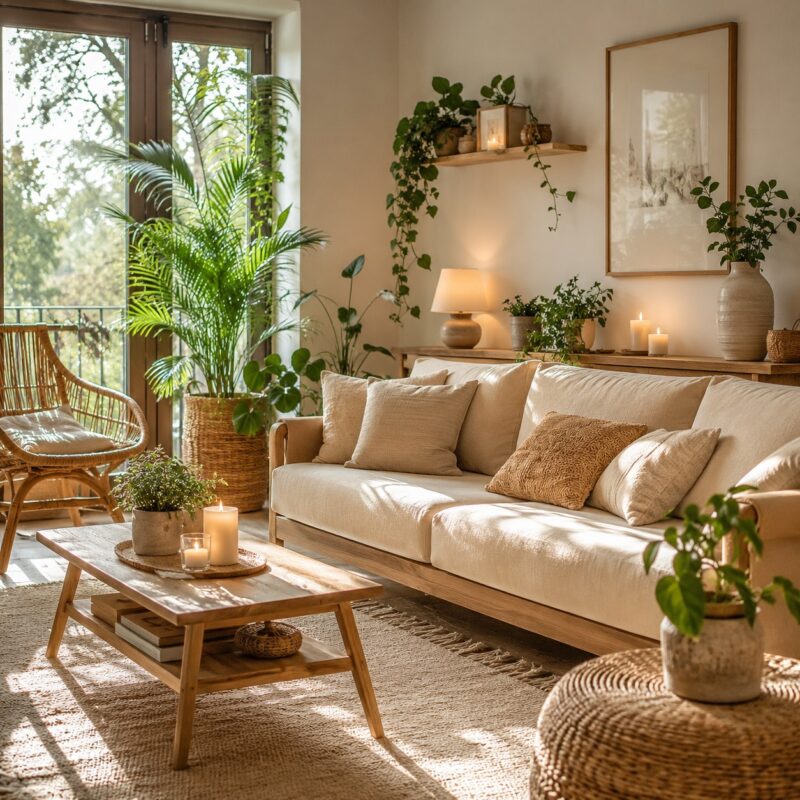
5. Create a Cozy Living Room
The living room should encourage relaxation and conversation.
Add:
- Soft cushions
- Comfortable throws
- Wooden furniture
- Warm rugs
- Minimal decorations
- Candles
- Books
- Family photographs
Avoid overcrowding the room with unnecessary furniture.
Leave enough open space for easy movement.
6. Keep Your Bedroom a Restful Retreat
Quality sleep begins with a peaceful bedroom.
Tips include:
- Neutral bedding
- Comfortable mattress
- Soft lighting
- Blackout curtains
- Minimal electronics
- Organized wardrobes
- Clean bedside tables
Choose breathable cotton or linen fabrics for maximum comfort.
7. Use Natural Fragrances
Scent influences emotions more than many people realize.
Natural fragrances instantly create a relaxing atmosphere.
Popular calming scents:
- Lavender
- Sandalwood
- Vanilla
- Jasmine
- Rose
- Cedarwood
- Chamomile
- Lemongrass
- Eucalyptus
You can enjoy these aromas through:
- Scented candles
- Reed diffusers
- Essential oil diffusers
- Potpourri
- Wax melts
A gentle fragrance makes your home feel welcoming and comforting.
8. Reduce Noise Pollution
Noise can quietly increase stress without us realizing it.
Ways to reduce unwanted noise:
- Thick curtains
- Carpets
- Cushions
- Soft furnishings
- Acoustic panels
- Bookshelves
- Door seals
You can also introduce relaxing background sounds:
- Nature sounds
- Rainfall
- Gentle instrumental music
- Wind chimes
- Flowing water fountains
9. Keep Your Home Clean Daily
Cleanliness contributes greatly to peace of mind.
Simple daily habits include:
- Make your bed every morning.
- Wash dishes after meals.
- Wipe kitchen counters.
- Vacuum regularly.
- Dust surfaces weekly.
- Empty trash bins daily.
A clean home always feels more relaxing.
10. Create a Mindfulness Corner
Everyone benefits from having a dedicated quiet space.
Your mindfulness corner might include:
- Meditation cushion
- Yoga mat
- Candle
- Essential oil diffuser
- Indoor plant
- Inspirational books
- Journal
- Soft blanket
Spend just 10–15 minutes here each day to recharge mentally.
11. Use Warm Lighting
Lighting dramatically changes a home’s atmosphere.
Replace harsh white lighting with:
- Warm LED bulbs
- Table lamps
- Floor lamps
- Candles
- Fairy lights
Layered lighting creates depth, warmth, and coziness.
12. Bring Nature Indoors
Natural materials create timeless beauty.
Decorate with:
- Wooden furniture
- Stone accessories
- Cotton textiles
- Linen curtains
- Bamboo baskets
- Jute rugs
- Wicker furniture
Organic textures make interiors feel warm and grounded.
13. Organize Every Room
Everything should have its designated place.
Use:
- Storage baskets
- Drawer organizers
- Decorative boxes
- Floating shelves
- Closet dividers
Organization reduces daily stress and saves time.
14. Personalize Your Home
Your home should reflect your personality.
Display meaningful items such as:
- Family photos
- Travel souvenirs
- Handmade artwork
- Favorite books
- Personal collections
- Meaningful quotes
Avoid decorating solely based on trends.
Choose items that genuinely make you happy.
15. Make Your Kitchen Inviting
The kitchen is often the heart of the home.
Keep it:
- Clean
- Bright
- Organized
- Functional
Store frequently used items within easy reach.
Fresh flowers, herbs, wooden cutting boards, and ceramic containers add warmth and charm.
16. Create a Relaxing Bathroom
Transform your bathroom into a mini spa.
Include:
- Soft towels
- Natural soaps
- Wooden accessories
- Essential oils
- Candles
- Bath salts
- Plants
Small changes create a luxurious experience.
17. Limit Digital Distractions
Technology is helpful, but constant notifications interrupt peace.
Consider:
- No phones during meals
- Screen-free evenings
- Charging devices outside the bedroom
- Digital detox hours
Less screen time often leads to more meaningful family interactions.
18. Introduce Relaxing Daily Rituals
Peaceful homes are built through peaceful routines.
Ideas include:
- Morning tea by the window
- Evening candle lighting
- Reading before bed
- Family dinners
- Gratitude journaling
- Weekend decluttering
Simple rituals create emotional stability.
19. Choose Quality Over Quantity
Minimalism isn’t about owning less—it’s about owning better.
Instead of buying many decorative items, invest in fewer high-quality pieces that last longer and bring genuine joy.
A thoughtfully curated home feels elegant without being overwhelming.
20. Fill Your Home with Love
Ultimately, peace comes from the people and moments within a home.
Practice:
- Kind communication
- Gratitude
- Shared meals
- Laughter
- Patience
- Forgiveness
- Hospitality
The emotional atmosphere of a home matters just as much as its physical appearance.
Common Mistakes to Avoid
Many people unintentionally create stressful environments by:
- Overdecorating rooms
- Keeping unnecessary clutter
- Using harsh lighting
- Ignoring unpleasant odors
- Neglecting regular cleaning
- Choosing uncomfortable furniture
- Filling every corner with décor
- Constant background television noise
Sometimes, removing something creates more peace than adding something new.
Budget-Friendly Ways to Create a Peaceful Home
Creating a calming home doesn’t have to be expensive.
Affordable ideas include:
- Rearrange furniture for better flow.
- Add indoor plants.
- Use natural cotton cushion covers.
- Declutter one room each weekend.
- Open windows for fresh air.
- Use candles or essential oils.
- Add cozy blankets.
- Introduce warm lighting.
- Display fresh flowers.
- Keep surfaces tidy.
Small improvements often have the biggest impact.
Final Thoughts
A peaceful home isn’t defined by luxury or size—it’s created through thoughtful choices, intentional design, and daily habits. By embracing simplicity, natural elements, soothing colors, organized spaces, and mindful routines, you can transform any house into a sanctuary that nurtures your mind, body, and soul.
Remember, creating a peaceful home is an ongoing journey rather than a one-time project. Start with one room, make small improvements each week, and focus on what truly brings you comfort and joy. Over time, your home will become a place where you feel relaxed, inspired, and genuinely at peace.
Whether it’s the gentle glow of a candle, the calming scent of lavender, the beauty of indoor plants, or the warmth of a cozy reading corner, every thoughtful detail contributes to an environment that supports a happier and healthier life. Invest in your home, care for it with intention, and let it become the peaceful retreat you deserve.
Make Your Home Feel Calm Every Day
Start with one small change today—declutter one corner, light a soothing candle, add a plant, or create a quiet space for yourself.
